
Choosing the right newsletter platform isn’t just about sending emails. The best tools help you grow your audience, automate campaigns, and even generate revenue through subscriptions or digital products. In this guide, we compare the best newsletter platforms in 2026 to help you choose the right option for your goals.
Quick Recommendations ⭐
| Platform | Best For | Starting Price | Free Plan Limits | Our Rating |
| beehiiv | Newsletter growth and built-in monetization | $49/month | 2,500 subscribers | 4.8 / 5 |
| Kit | Digital product sellers and visual automations | $39/month | 10,000 subscribers | 4.7/5 |
| Substack | Writers wanting a completely free tool | $0/month (10% fee on revenue) | Unlimited subscribers | 4.2/5 |
| MailerLite | Budget-conscious users needing a drag-and-drop builder | $12/month | 250 subscribers | 4.2/5 |
Comparison at a Glance
| If you want… | Choose |
|---|---|
| Best overall | beehiiv |
| Biggest free plan | Kit |
| Completely free publishing | Substack |
| Best value | MailerLite |
The Best Tools
1. beehiiv
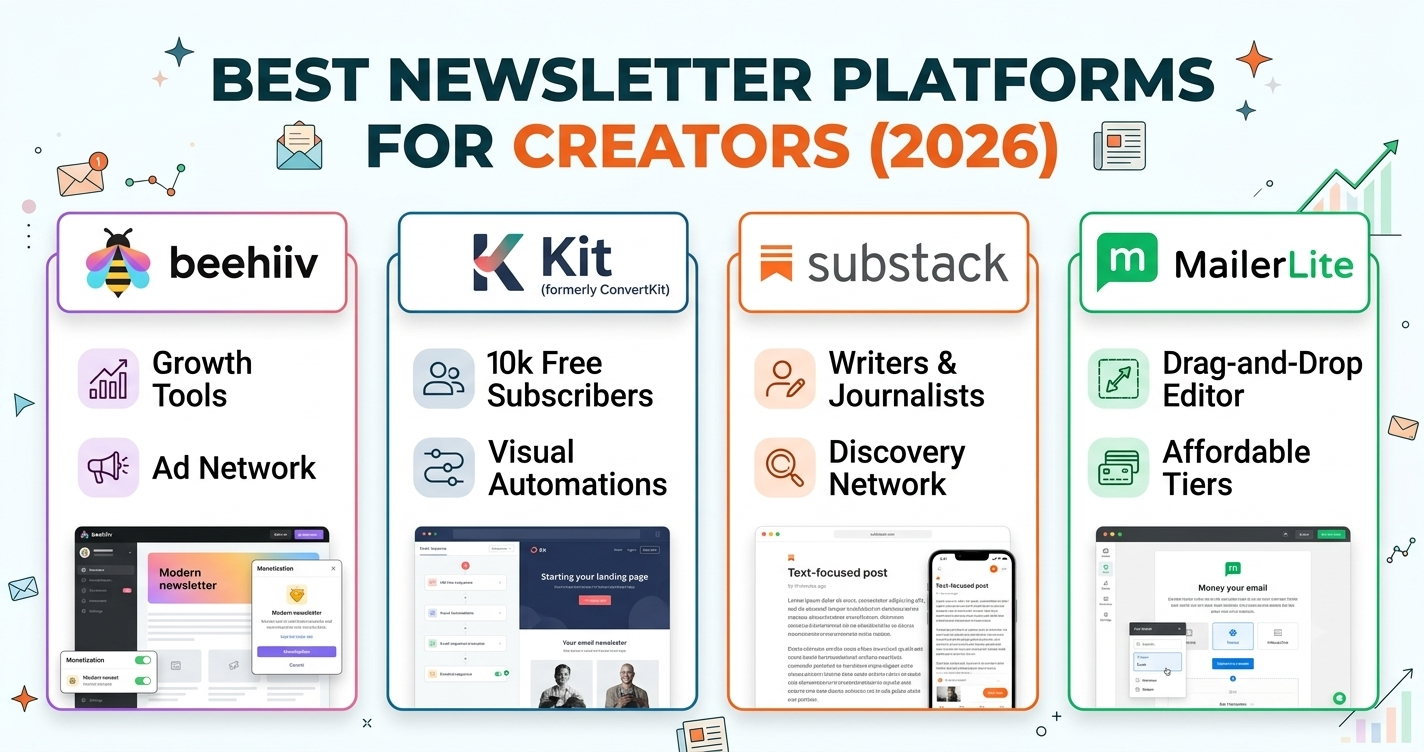
beehiiv is engineered specifically for newsletter operators whose primary business model is the email itself. It focuses heavily on organic growth tools and takes zero platform fees on paid subscriptions.
- Built-in Ad Network. Users can easily monetize their lists by inserting premium sponsor ads directly into their newsletters with a single click.
- Recommendation Network. It features a highly active creator network that allows newsletters to recommend each other, driving massive organic subscriber growth.
- 0% Subscription fees. Unlike Substack, beehiiv takes absolutely no cut of paid subscription revenue—only standard Stripe processing fees apply. (beehiiv vs Substack Comparison)
- Generous Free Tier. While the free tier is generous at 2,500 subscribers, the paid Scale plan (starting at $49/month) scales up in price as the list grows, which can become expensive for massive audiences.
2. Kit
Formerly known as ConvertKit, Kit underwent a massive rebrand and pricing restructuring in late 2024 and 2025. It is the powerhouse option for creators selling courses, coaching, and digital products.
- Massive Free Tier. As of the latest updates, Kit’s free plan now supports up to 10,000 subscribers on its free “Newsletter” plan, completely disrupting the entry-level market.
- Advanced Visual Automations. The platform excels at building complex, multi-step email sequences based on user tags and behaviors.
- Digital Commerce. Creators can build landing pages and checkout systems to sell digital downloads and tip jars directly through the platform.
- Premium Paid Tiers. While the free tier is massive, unlocking the visual automations requires upgrading to the Creator plan (starting at $39/month), which recently saw a significant price hike in 2025.
3. Substack
Substack remains the undisputed champion for writers and journalists who want to publish content and get paid immediately without dealing with technical configurations.
- Zero Upfront Costs. The platform is entirely free to use, regardless of how large the email list grows, meaning users never pay a monthly subscription fee.
- Built-in Discovery. The Substack app and internal ecosystem function like a social network, putting articles in front of a massive audience of active readers.
- 10% Revenue Cut. To make money, Substack takes a flat 10% fee from all paid subscriptions generated by the creator.
- Customization Limits. Unlike Kit, users cannot build advanced sales funnels, visual automations, or highly customized website templates. (Kit vs Substack Comaprison)
4. MailerLite
MailerLite is a general-purpose email marketing tool that blends the automation power of expensive platforms with a highly intuitive, beginner-friendly interface.
- Clean Drag-and-Drop Editor. The email and landing page builder is incredibly fast and features interactive blocks like countdown timers and surveys.
- Accessible Automations. It includes single-trigger automations and marketing funnels even at the entry-level pricing.
- Affordable Paid Tiers. The Comfort plan starts at just $12/month, making it one of the most budget-friendly options on the market.
- Free Plan. A recent mid-2026 update drastically reduced the free plan from 1,000 down to just 250 subscribers, making it tough for brand-new users to start without paying.
How to Choose
Step 1: Determine the primary business model. If the goal is selling digital products and courses, the robust tagging and automations in Kit make it the strongest choice. If the newsletter itself is the product, beehiiv’s growth tools are superior. (beehiiv vs Kit Comparison)
Step 2: Evaluate upfront budget vs. long-term revenue. Substack is perfect for writers with zero budget since it is free forever, but giving up 10% of revenue becomes incredibly expensive once a newsletter reaches thousands of paying subscribers.
Step 3: Look at current subscriber counts. For lists hovering around 5,000 to 9,000 subscribers, Kit’s new 10,000-subscriber free tier offers immense immediate value, whereas MailerLite will require a paid plan almost instantly.
Our Recommendation
For the vast majority of modern creators, beehiiv is currently the best newsletter platform on the market. Its combination of a generous 2,500-subscriber free plan, built-in monetization tools like the Ad Network, and a 0% platform fee on paid subscriptions makes it a financial powerhouse.
However, if complex automations and digital product sales are the core focus of the business, Kit is an incredibly close runner-up, especially given its generous 10,000-subscriber free tier.
FAQ
- What is the cheapest newsletter platform? Substack is the cheapest upfront because it charges absolutely no monthly fees regardless of list size. However, MailerLite ($12/month) is the most affordable paid option that includes automation features.
- Can you migrate subscribers between platforms? Yes. Every major platform allows users to freely export their subscriber lists as a CSV file and import them into a new service without losing their audience.
- Do these platforms charge for emails sent? No. All four platforms listed in this guide charge based on the total number of active subscribers on the list, not by the volume of emails sent per month.
Disclosure: StackDrawer is reader-supported. If you purchase through certain links on this site, we may earn an affiliate commission at no additional cost to you. Learn more in our Affiliate Disclosure.